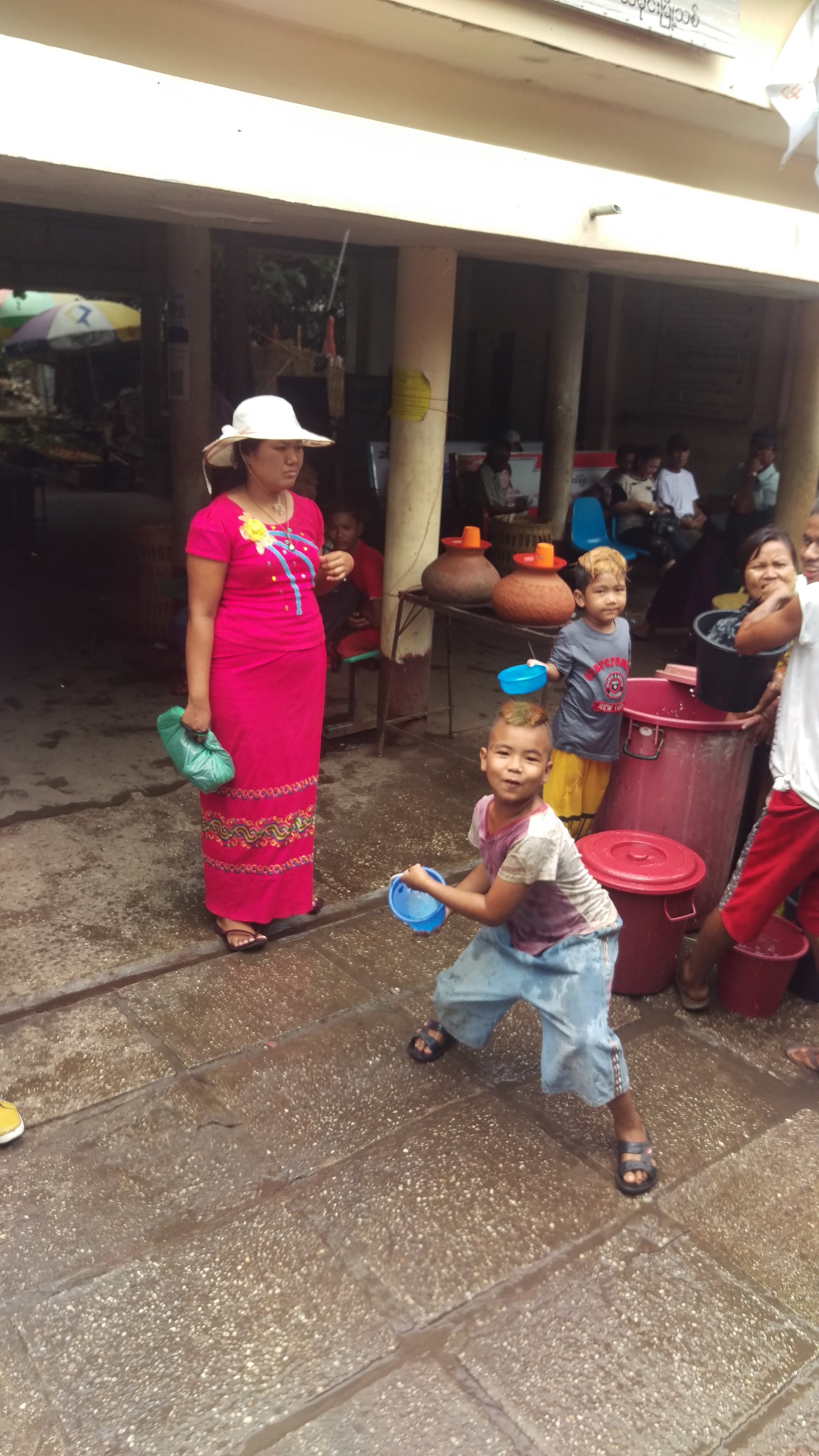
Water everywhere. Coming from trucks with giant hoses attached, from small children with big grins, no shoes, and a penchant for mischief, from passersby opening their disposable plastic water bottles to dump drinking water on your head, to the monsoons pouring spontaneously from the sky, soaking you as soon as you had dried out in the hot tropical sun.
This was Yangon.
Traveling to Myanmar during the Buddhist Water Festival was not necessarily our intention, but now that we were there, we felt caught in a typhoon of unexpected experiences waiting to happen. Walking around the city during the high days of the festival, having a version of bubble tea pushed into our hands by grinning women with painted white cheeks, working through an assembly line of festival goers, ducking the inevitable water bucket being poured on our heads despite our protests, avoiding small children with bowls of water obtained from questionable sources and adults scrupulously dumping their bottles of drinking water, were instances we had not dreamed of. The frosting on the cake was returning to our apartment soaking wet only to have the old doorman of our apartment dump an entire five gallon bucket on us as payment for entering. We were never sure if we were being targeted specifically because we were foreign or merely out of the joy of the holiday–though we seemed to be wetter than most.
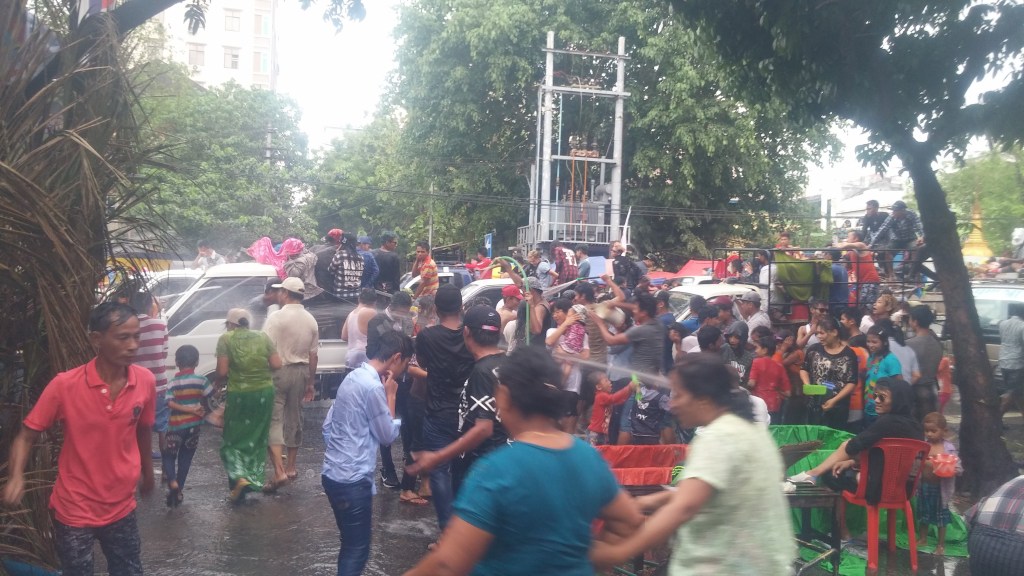
We thought we had prepared for the deluge of water, brought clothes that would dry quickly, wore sandals, purchased waterproof pouches for our cell phones and money (of the water park variety), even made use of the rain cover on our backpacks after we left the airport. What we had not prepared for was the humorous attitude of the Burmese, the English words “Happy New Year” followed by that sneaky but friendly smile as they poured water over our heads. What the water festival actually turned out to be, is not something we had ever seen before: the massive stages with fire hoses, and water mingling in the street with cockroaches, various tiny unidentifiable bones of animals, and street dirt, everyone happy and joyful and celebrating together was shocking, inspiring and mythical all at once.
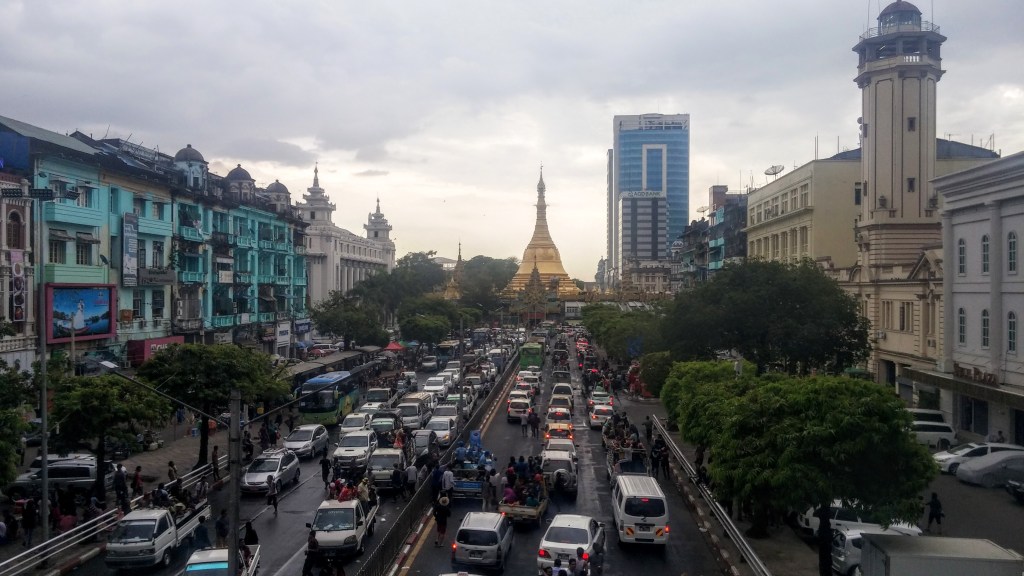
During these first few days in the country, we were quite literally baptized into the tradition, kindness and joy it represented. The journey became more complex as we moved onto the next city.
Having opted against the worse safety ratings of the government-owned airline and old colonial train system, we embarked upon our bus adventure after three days in Yangon. Finding some of the last tickets available (due to the holiday) we counted as a lucky break. The first bus ride was surreal. This was categorized as “luxury.” As far as we could tell this meant plush seats, a mini toothbrush with toothpaste, a moist towelette, and rest stops at more refined and civilized places (though the toilets were always the same squatty potty and very dirty). The conundrum was that they played a movie at very loud volume into the wee hours of the night. To everyone else on the bus, this appeared to be normal. But despite the plush seats, we were quite uncomfortable, and earplugs did little to block the noise. This contrasted with later bus rides where we were crammed like sardines, dust filling air from the roads bumping all night, with rest stops at places swarming with people quickly eating before they got back on the bus, piles of rice and other food in greasy display cases; I won’t describe the restrooms there. We soon discovered that these less “official” bus companies would scan the side of the road for people looking for a ride, pull over unexpectedly, negotiate for a bit, and the pull down extra seats we didn’t know existed creating an even more cramped ride. It was unclear whether or not these individuals were paying the driver or the company itself, or the driver attendant. Perhaps a little of each.
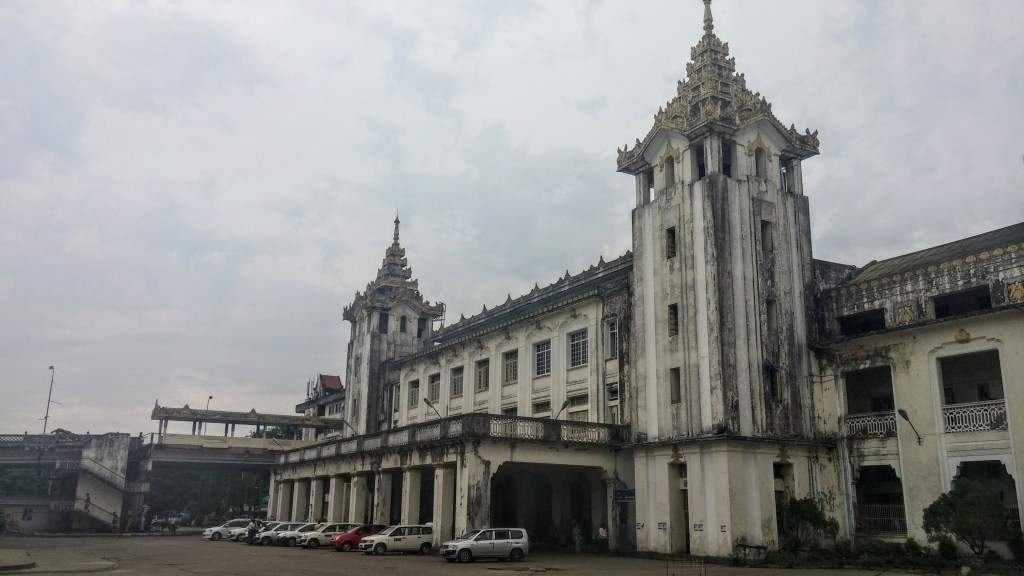
Bribe culture is a fascinating phenomenon. When we took a taxi to a train station in Yangon, the driver had to stop at the entrance and pay a few Kyat for our taxi to go through. These individuals did not appear to be acting in any official capacity, but just happened to set up camp here to decide who did it didn’t get to enter the train station parking lot. The train station itself, looked a lot like the rest of the buildings in Yangon: old and decrepit stone building from British colonial rule, covered in miss and blackened by the humid and hot tropical climate, on stone that wasn’t meant for such climate, making them look out of place and perhaps a symbol of what British colonial rule had been: out of sync with both climate and culture.
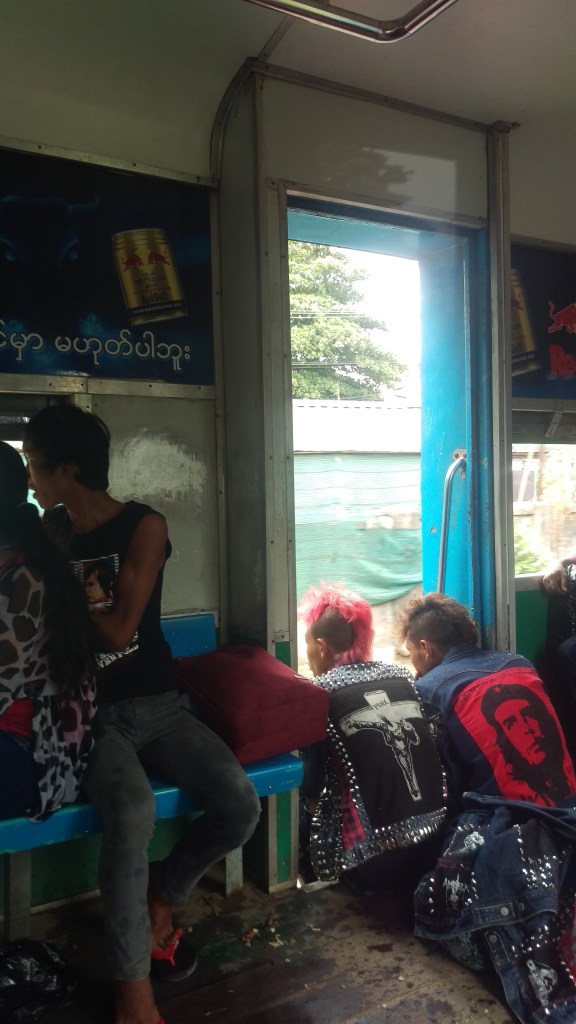
Train travel itself, we decided to try in a mild way with the commuter rail that encircled the city and connected the surrounding suburbs. What we saw was what one would see in any American city, just its own Burmese brand: a group of Burmese Punk rockers complete with mohawks, leather jackets and tight jeans sharply contrasted with the woman in traditional Burmese garb (long wraparound cotton skirt, and short-sleeved shirt) carrying a huge basket of fried crickets selling her wares to the passengers as they efficiently entered and exited the train on their commute. The train, no doors or closed windows to speak of, bumbled along the tracks swaying at times. Occasionally it got up to pretty fast rates of speed for a shocking ride of swaying back and forth precariously. Each stop brought a new slew of small children flinging water from big barrels and shouting new year’s greetings. Monsoon season had come early, and we had a downpouring of rain that came through the open windows and doorless doorways. What does one see from the windows of a train going too fast on ancient tracks? Dogs wandering about, miles of makeshift houses with whatever material the makers could get their hands on to provide shelter and protection from the elements, corrugated metal, wood, tarps, rope, all muddled together in this view. Passing mother’s carrying food, monks with alms bowls and once, a small naked child, not more than three years old crying on a platform, an adult nearby.
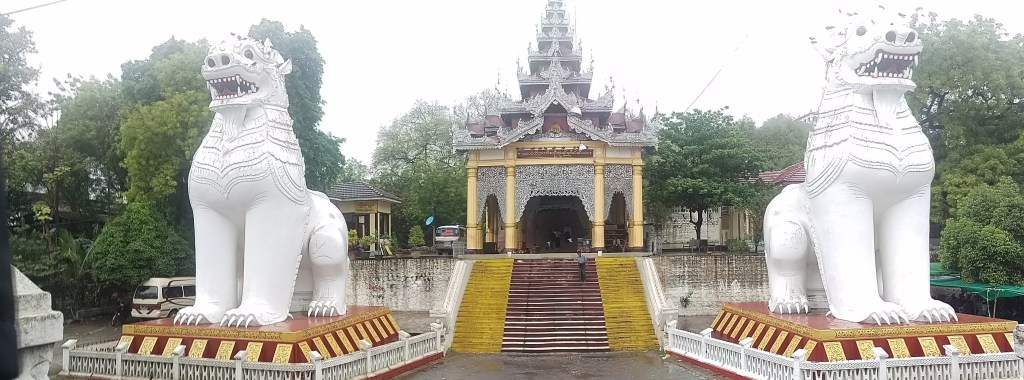
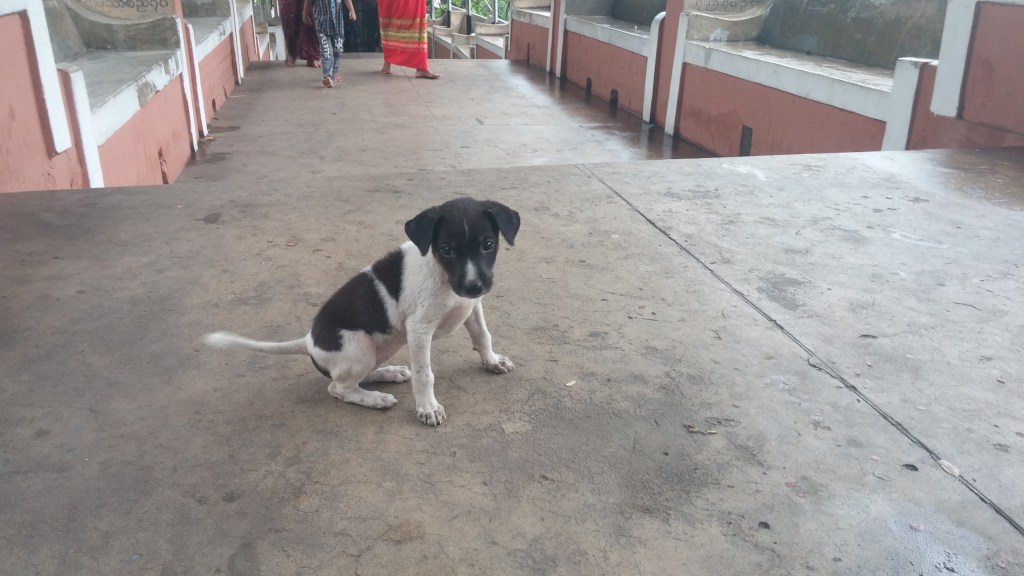
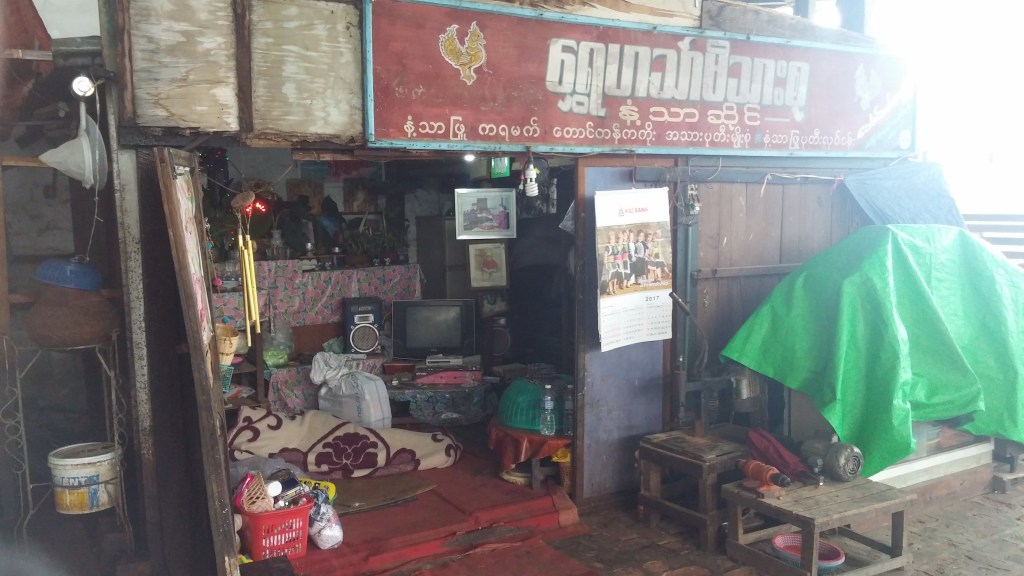
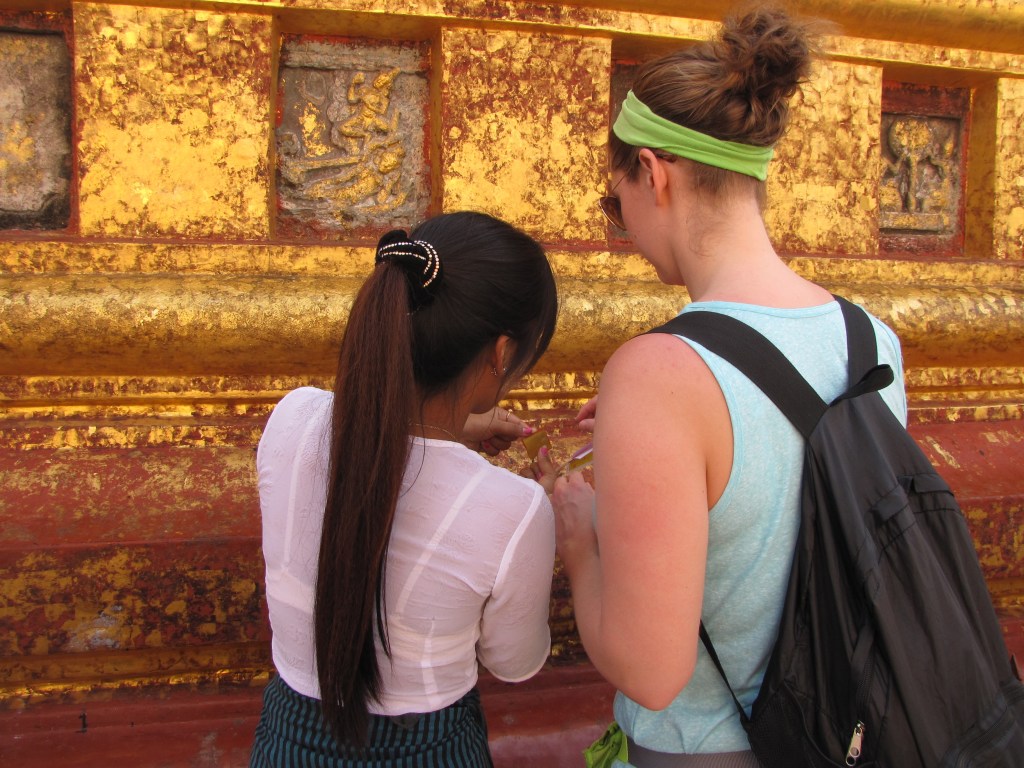
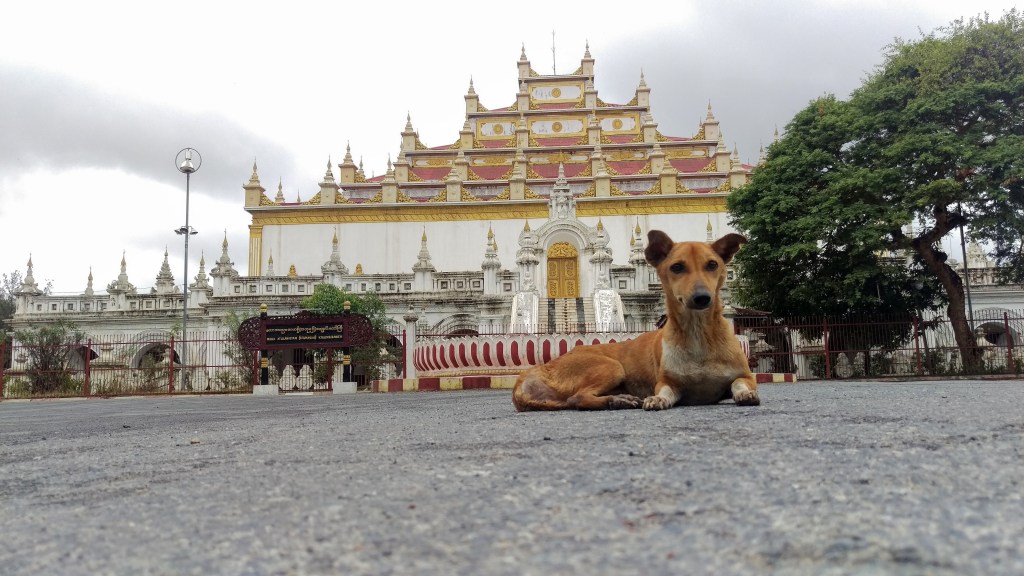
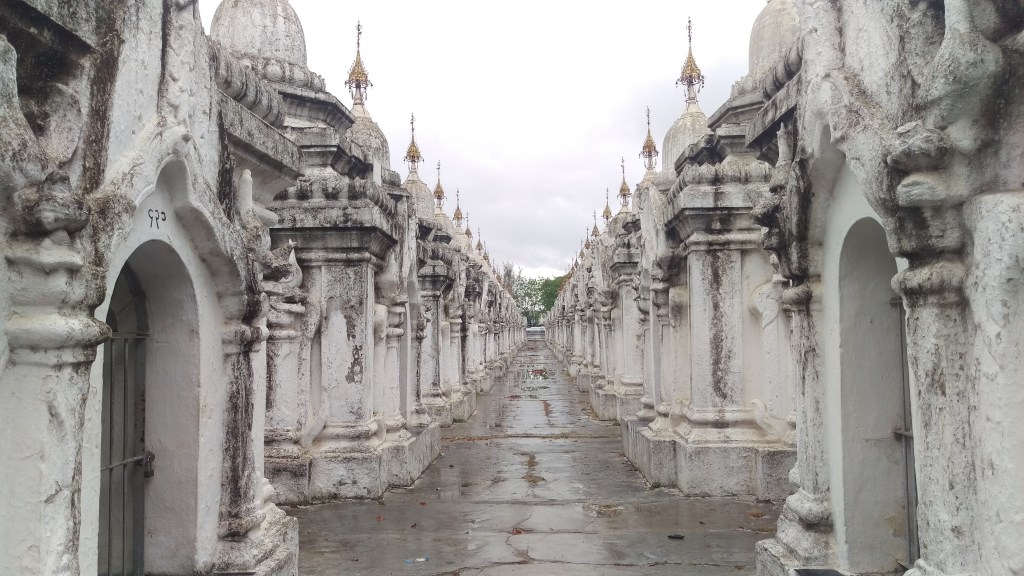
In the city of Mandalay, on a low day of the festival when people were celebrating with their families, the streets lay abandoned and most restaurants were closed, we found ourselves wandering in the rain, feeling slightly miserable when a cab pulled over and the cabbie with some cryptic English and various hand gestures, asked if we wanted a ride to the big pagoda. This man, Mr. Nyugent, told us he could drive us to the pagoda, around the city and take us to different sites, stop for food and function as an impromptu tour guide for the day; he was so kind and friendly, that we couldn’t refuse. For very little money this man devoted his day to us, talking about the sites we visited in slightly understandable English and with a great deal of hand gestures. But surprisingly for us, we knew exactly what he was saying. When we arrived at the big pagoda, he drove us to the top, told us to give him our shoes, and said to “follow the signs for the lions.” Anyone might think we were crazy for giving a stranger our shoes and trusting that he would meet us at the bottom, even that the Lions would be there, but we put our faith in him, and started off on our long descent. The pagoda was massive, the size of a mountain, with layers upon layers of steps and platforms. Statues of Buddha in various forms lived at each level. There were Sitting Down Buddhas, Lying Down Buddhas, Laughing Buddhas, Thousand Armed Buddhas. Glistening with the layers of gold leaf of hundred of years of acquiescence. In sharp contrast to the pomp and splendor of these various golden statues with offerings laid at their feet, there were squatters who clearly lived in shacks built on the pagoda, with TVs and electricity, hundreds of stray dogs, and children running around. Accompanying that was the waste all of the above propagated: trash, animal bones and dog poo. We made our way down over the course of hours and followed the signs for the Lions. And lo and behold our friend Mr. Nyugent was there at the bottom, with our shoes and a wide and joyous smile.
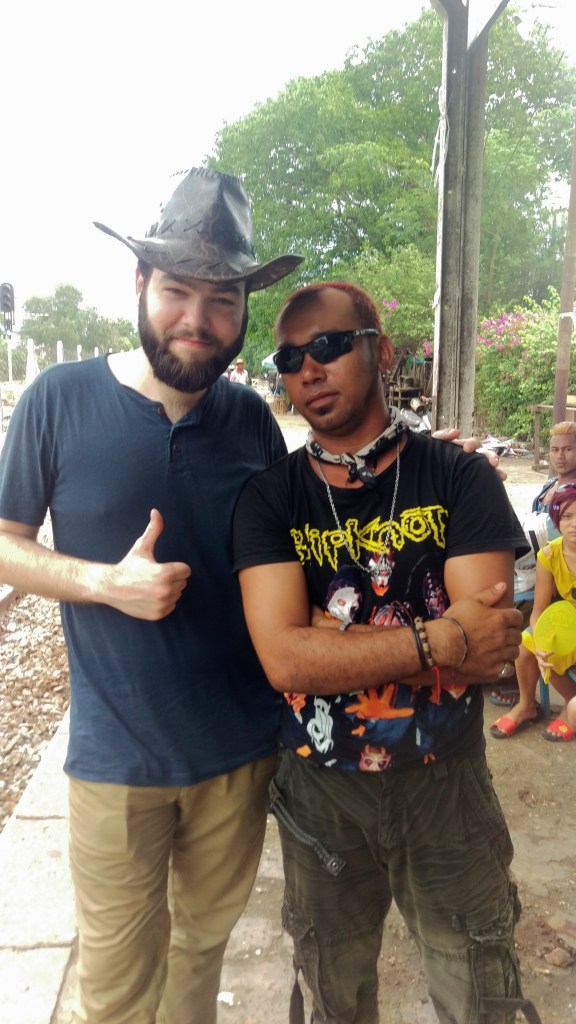
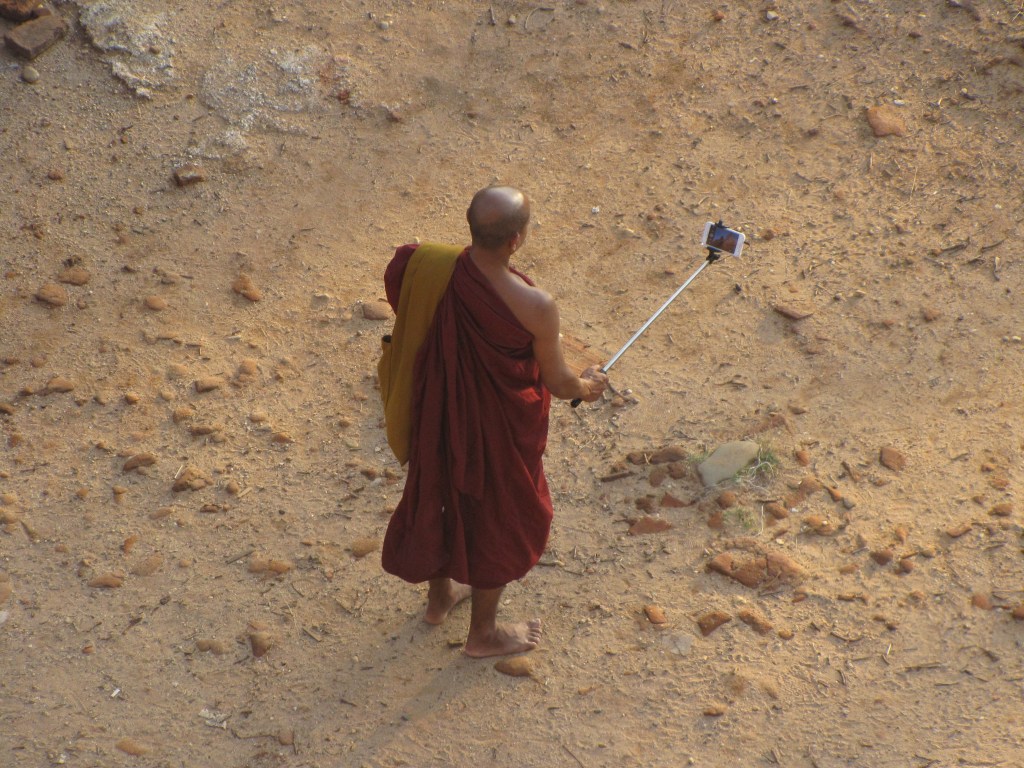
Perhaps this is most what Myanmar is: a country of deep political corruption–for all intents and purposes a military state–striving for democracy, navigating the waters of their place in a globalized world, but facing serious human rights violations and criticism from the Western world. The genocide of the Rohingya muslim minority was occurring far in the north at the same time. It is easy to look at places like this in judgement, where human trafficking is common and supported by corrupt government practices, where the poverty is in your face. We had arrived at the airport with no small amount of cynicism, expected to be scammed, cajoled out of our money or stared at. Instead, we were welcomed, smiled at, asked to take one thousand selfies with and yes, even loved. For the first time in my life, I felt like a celebrity. Never before had I been approached on the street by a complete stranger and asked if they could take my picture. Never before had my husband and I sat on a commuter train next to a man who had just purchased a bag of fried crickets and been offered to share in his snack. Never before had a stranger taken my husband to find a bathroom and then paid for him to use it, followed by a fifteen minute photo shoot with said stranger complete with Slipknot t-shirt and cowboy hat. And of course, our friend Mr. Nyugent, taking pity on us and taking us to see the sights of Mandalay.
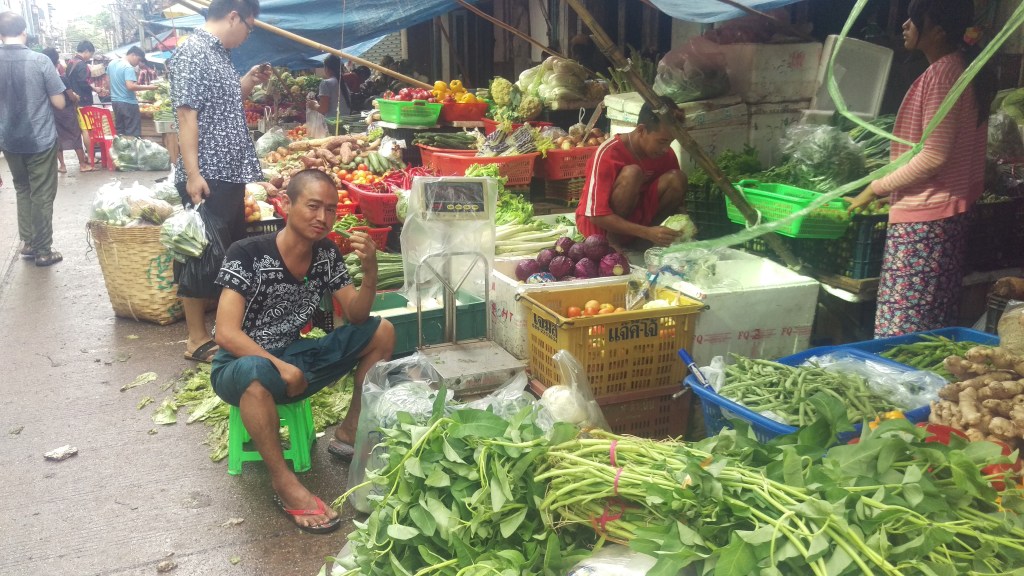
It was terrifying and exhilarating all at once. It called into question everything I had previously thought about “developing countries.” The people lived by standards below what Americans would call “Civilized.” They did not experience the types of freedoms that we do, but they were people, and not all that different from us. They were happy, no joyful even, to see us, to celebrate their holiest and happiest day of the year with us. At moments, I felt like I wanted to rescue, to aid, in my White Savior mentality, but those were followed by moments of change and learning within myself. This experience was shocking, life-changing and moving. I will never refer to a country as “third-world”because that implies that it is an “other,” that the people are somehow “less than.” it implies that there exists a mysterious hierarchy of happiness, and Americans have the corner on it. This is simply not true. Myanmar is not an “other.” It is a beautiful place with a people that have their own customs, traditions and culture centered around Buddhism. A place that is still trying to recover their sense of identity from and trying to bounce back from the destruction that British Colonialism brought for so many years. A place where people live, cook food, have babies, get by.
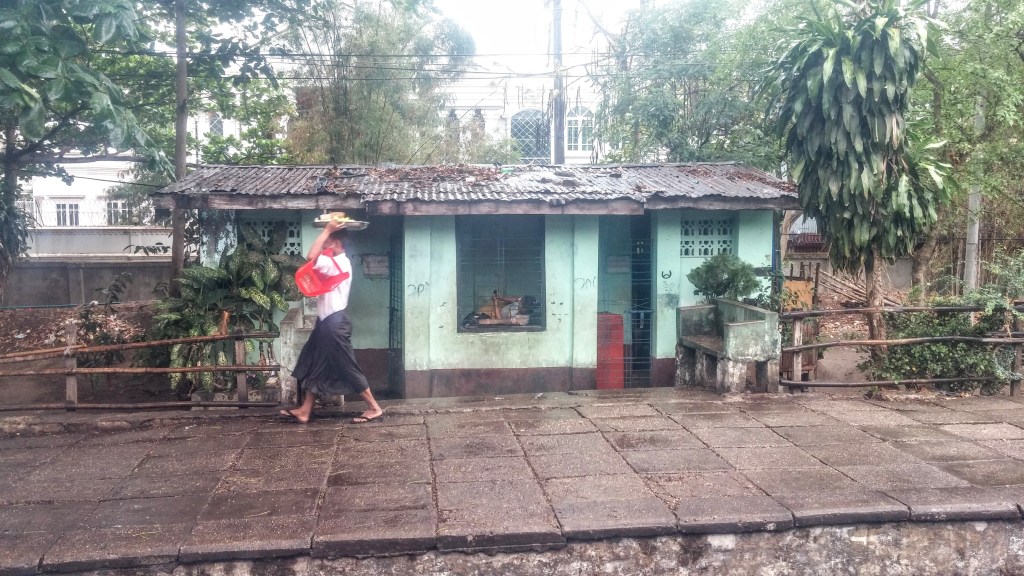
The UN Human Development Index (which quantifies nations on several factors relating to quality of life) puts Myanmar as 148 on a list of 189. They are portrayed in the news as a place of no freedom, extreme poverty and yes, religious intolerance. The leader and democratic hero of the people, Aung San Suu Kyi, has come under criticism for not calling out the terrible things the army was doing to the Rohingya. This is what we see in the American news, and we are rightly sad and empathetic for what is going on. But our story of that country is now a single story and viewpoint. I feel we do this often as Americans. We think of places who do not have as high a standard of living as less than us, as needing our saving power (whether that be with armies or with aid). We see money as a direct indicator of quality of life. We see only what the media wishes us to see, as that is our only “access” into the country. But on my trip to Myanmar, I saw a country that is still in touch with their humanity. There were many terrible things that happened there, but terrible things happen in America, we just seem to pretend that it is not happening.
I left Myanmar different, devastated, humbled and inspired.
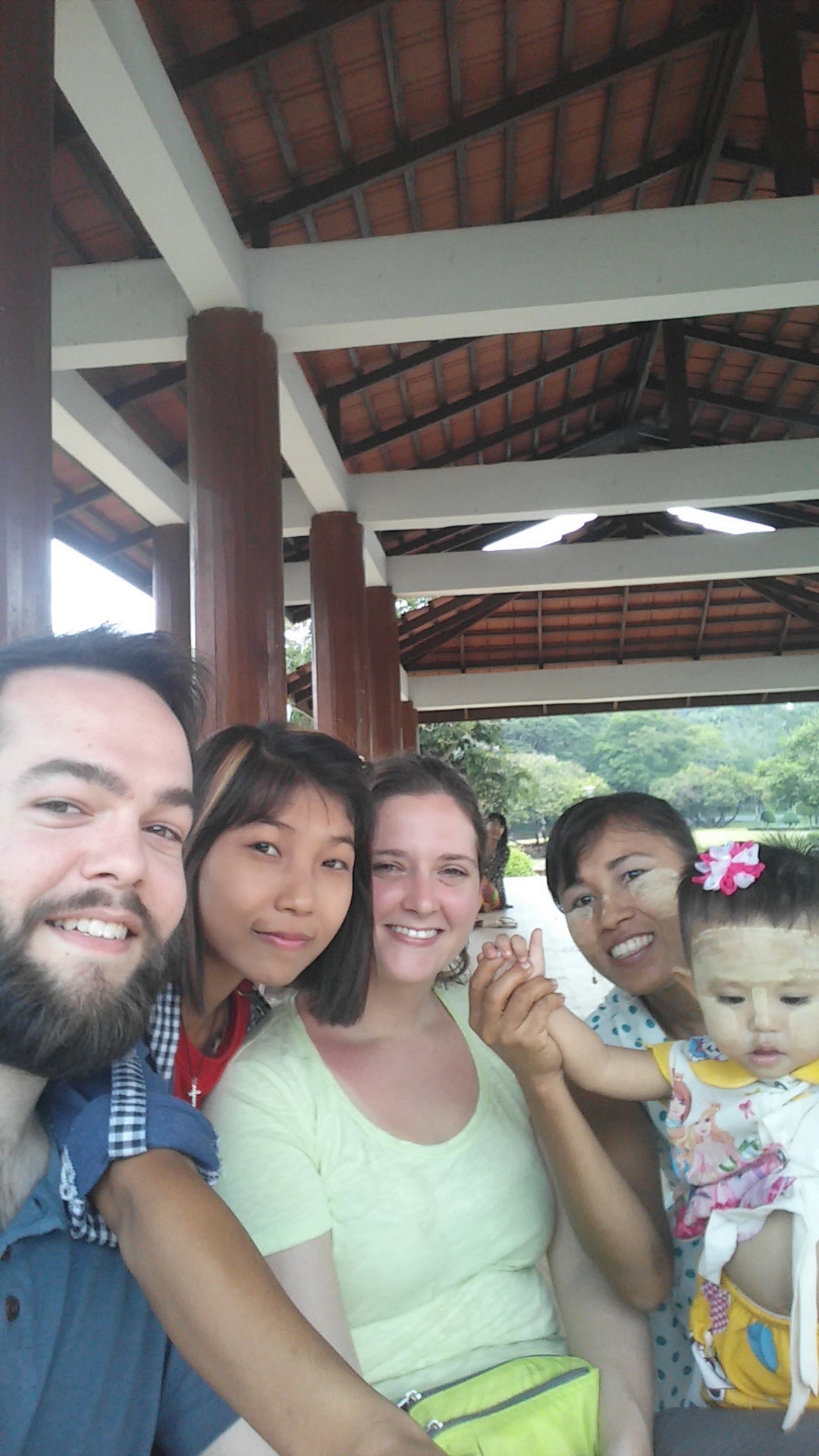
One of the many selfies that people asked us to take
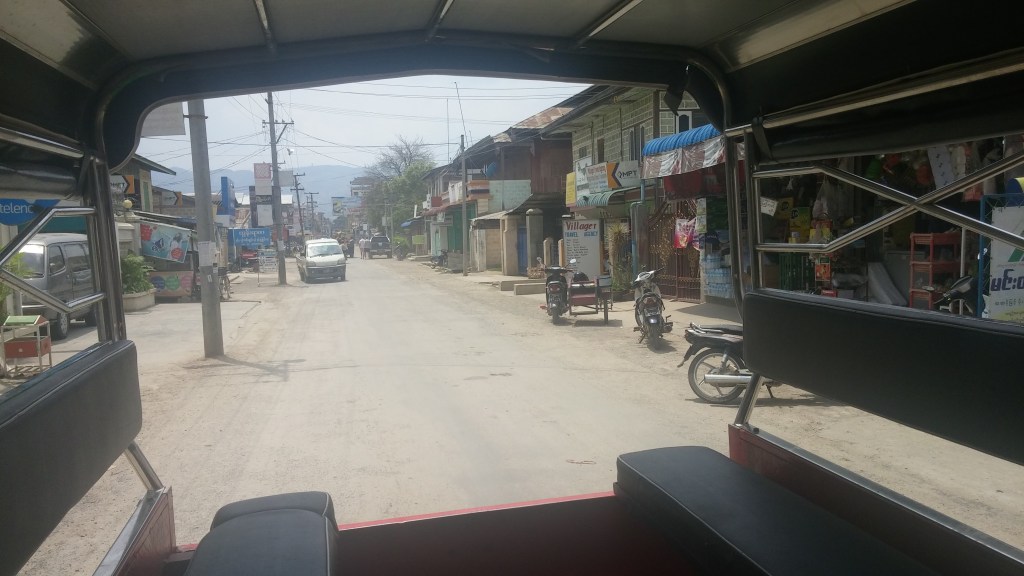
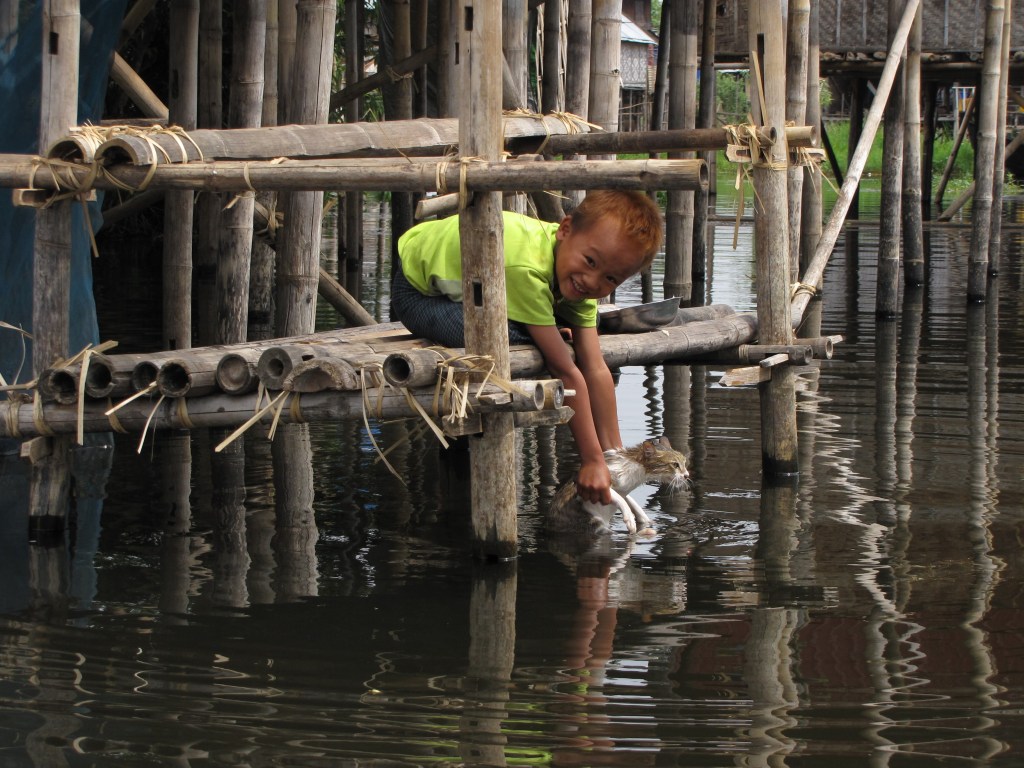
 Following Tony